
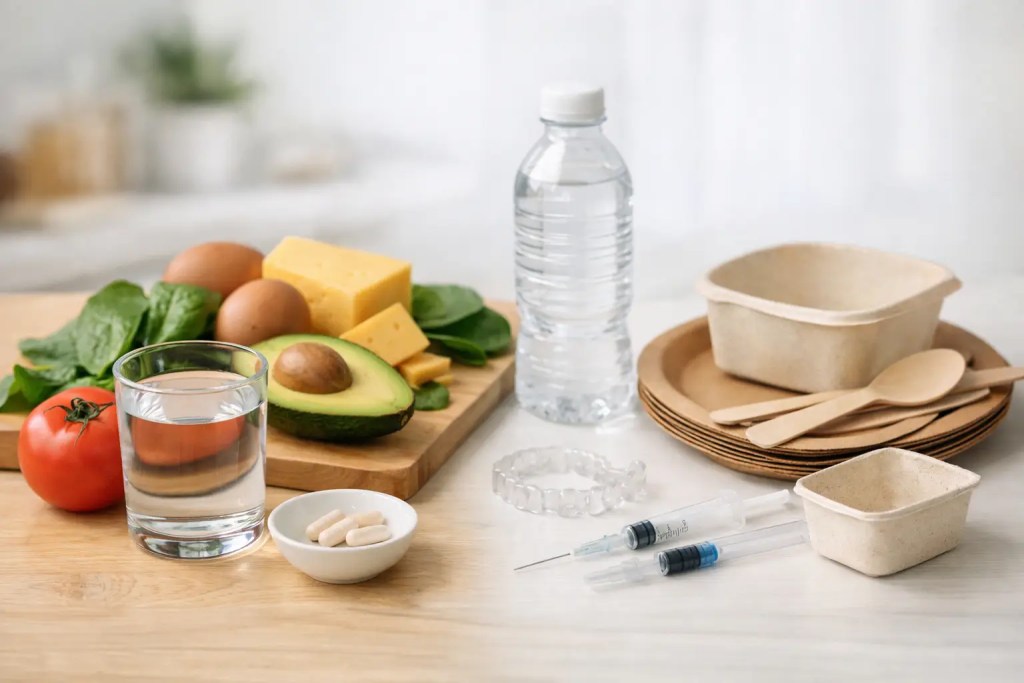
A prototype that touches food or skin moves into a different risk category fast. The question is no longer just whether the part prints well, holds tolerance, or ships on time. It becomes: are there food-safe or biocompatible materials available? The short answer is yes, but material availability is only one part of the decision. In practice, process selection, post-processing, surface condition, and intended exposure matter just as much as the base material.
For engineering teams, this is where many projects go off track. A datasheet may show promising chemical resistance or a supplier may state that a raw material meets a standard, but that does not automatically make the final printed part acceptable for food contact or medical-adjacent use. The final answer depends on what standard applies, how long the contact lasts, whether the part is reusable, and how it will be cleaned, sterilized, or handled in production.
Are there food-safe or biocompatible materials available for 3D printing?
Yes, there are, across both polymers and metals. But they are not interchangeable, and they are rarely approved in a blanket sense for every use case.
For food-contact applications, teams often look for materials with suitable chemical stability, low extractables, and a surface that can be finished to reduce porosity and contamination risk. For biocompatible applications, the focus shifts to how the material interacts with skin, tissue, or bodily fluids, and whether it has been tested against recognized standards such as ISO 10993 or USP Class VI.
That distinction matters. A material may be acceptable for occasional food contact and still be inappropriate for prolonged skin contact or medical use. The reverse can also be true if the finished part geometry, print process, or cleaning method creates contamination issues.
Food-safe versus biocompatible: not the same requirement
These terms are often grouped together, but they solve different compliance problems.
Food-safe generally refers to suitability for contact with food under defined conditions. That may include dry food, acidic food, short-term contact, repeated use, or washdown exposure. A part used as a fixture on a packaging line is a different case from a consumer-facing utensil or beverage-contact component.
Biocompatible refers to the biological response of the body to a material. In practical terms, that could mean a part is acceptable for skin contact, mucosal contact, or a more specialized medical setting. The testing pathway is tied to the duration and type of contact. A surgical guide, a wearable housing, and a lab handling tool do not sit in the same category.
For that reason, engineers should avoid broad statements such as “medical grade” or “food grade” unless they can tie them to a specific standard, processing route, and final use condition.
Which materials are commonly considered?
In polymer additive manufacturing, certain nylons, polypropylene-like materials, and selected photopolymer resins are often evaluated first. PA12 is a common engineering polymer in powder-bed processes because it offers good dimensional stability and reliable mechanical performance. That said, standard PA12 powder by itself should not be assumed food-safe or biocompatible without confirming the exact grade, supplier documentation, and finished-part condition.
Some SLA resins are marketed specifically for biocompatible or dental workflows. These can be appropriate when the resin is certified for a defined application and the print is processed exactly to the manufacturer’s validated instructions. That last point is not optional. Wash time, UV cure, orientation, support removal, and post-cure parameters can affect whether the final part remains within specification.
For metal applications, stainless steel 316L is one of the more relevant options when corrosion resistance, cleanability, and possible food or medical-adjacent use are under review. It is widely recognized, mechanically reliable, and suitable for many industrial parts after proper finishing. Even then, a rough as-printed metal surface may not be ideal for direct contact applications unless it is machined, polished, or otherwise finished to the required standard.
Silicone, urethanes, and molded thermoplastics can also enter the conversation when additive manufacturing is only one stage of the development route. In some cases, printing the master pattern or tooling and then moving into casting or injection molding is the more realistic path for a validated food-contact component.
The process can make or break the answer
A food-safe raw material can become a poor food-contact part if the manufacturing process leaves voids, rough surfaces, or trapped contaminants. The same logic applies to biocompatibility.
Powder-bed polymer processes such as SLS and MJF are strong choices for functional parts, but their natural surface texture is not always ideal where hygiene is critical. The porosity and surface roughness can make cleaning harder, especially for repeated-use applications. Secondary finishing may improve that, but the extent of improvement has to be evaluated, not assumed.
SLA can produce smoother surfaces and fine detail, which is useful for guides, housings, and medical-adjacent prototypes. But resin chemistry is more sensitive. If a resin is not specifically validated for the target contact condition, the visual quality of the print does not mean it is suitable.
FDM presents another trade-off. Some thermoplastics used in extrusion have food-contact relevance in other manufacturing methods, but printed layer lines can create sanitation challenges. Nozzle contamination and machine history also matter if process control is not tightly managed.
Metal additive manufacturing offers strong performance for tooling, fixtures, and durable end-use components, especially when paired with machining and polishing. In regulated or hygiene-sensitive settings, that combination often matters more than the print alone.
What engineers should verify before selecting a material
The fastest way to reduce risk is to define the exposure before selecting the process. Ask what the part touches, for how long, at what temperature, and how often. Then ask how it will be cleaned and whether the part is disposable, reusable, or sterilized.
From there, verify four things.
First, confirm the exact material grade, not just the generic family. “PA12” or “resin” is too broad to support a compliance decision.
Second, review the applicable documentation for the raw material and, where available, the final process. A statement on the pellet, powder, or resin does not always transfer directly to the printed part.
Third, assess the surface finish required by the application. A part intended for incidental contact may tolerate a different finish than one used in repeated direct contact.
Fourth, decide whether additive manufacturing is the final production method or a bridge process. If the goal is design validation, a printed prototype may be enough. If the goal is a production food-contact component or patient-contact device, the route to validation should be considered from the start.
Typical use cases where the answer is yes, with conditions
There are many applications where food-safe or biocompatible materials can be used successfully, provided the requirements are defined correctly.
Food and beverage teams may use additive manufacturing for line fixtures, change parts, jigs, guides, or covers that sit near product zones but do not always contact food directly. In these cases, material cleanliness, chemical resistance, and ease of sanitation are often more important than a broad consumer-food claim.
Medical device and life-science teams may use biocompatible resins for fit checks, surgical planning models, dental components, or limited-contact tools. The phrase “limited-contact” does a lot of work here. A validated resin used within its specified workflow can be very effective, but it must match the intended duration and type of contact.
For wearable devices, skin-contact housings and interface components may also be feasible with the right resin or elastomer, particularly during prototyping. The challenge is usually not whether a part can be printed, but whether the exact material-process-finish combination is documented well enough for product release.
When the answer is no, or not yet
Sometimes the right engineering answer is to avoid direct claims until more validation is complete.
If the part will face repeated high-temperature wash cycles, aggressive cleaning chemicals, or long-term direct food exposure, a standard printed polymer may not be the best choice. If the application involves prolonged patient contact or implant-related use, the evidence threshold rises sharply. In both cases, moving to a validated resin, a finished metal part, or a conventional production process may be the more reliable path.
This is where a multi-process manufacturing partner becomes useful. A project may start with additive manufacturing for geometry validation, then move to CNC machining, casting, or molding once the compliance path is clearer. That approach often saves time because it avoids overcommitting to a material that works mechanically but creates downstream approval problems.
At Additive3D Asia, these decisions are usually best handled as a process-selection exercise rather than a simple material request. Engineers tend to get better results when they define the performance requirement, contact condition, and finish expectation first, then match those needs to the manufacturing route.
The practical takeaway is straightforward. Yes, food-safe or biocompatible materials are available, but the material name alone is never enough. If the part has to touch food, skin, or a regulated environment, treat the printed component as a full system – material, process, finish, cleaning method, and use case – and make the selection from there.