
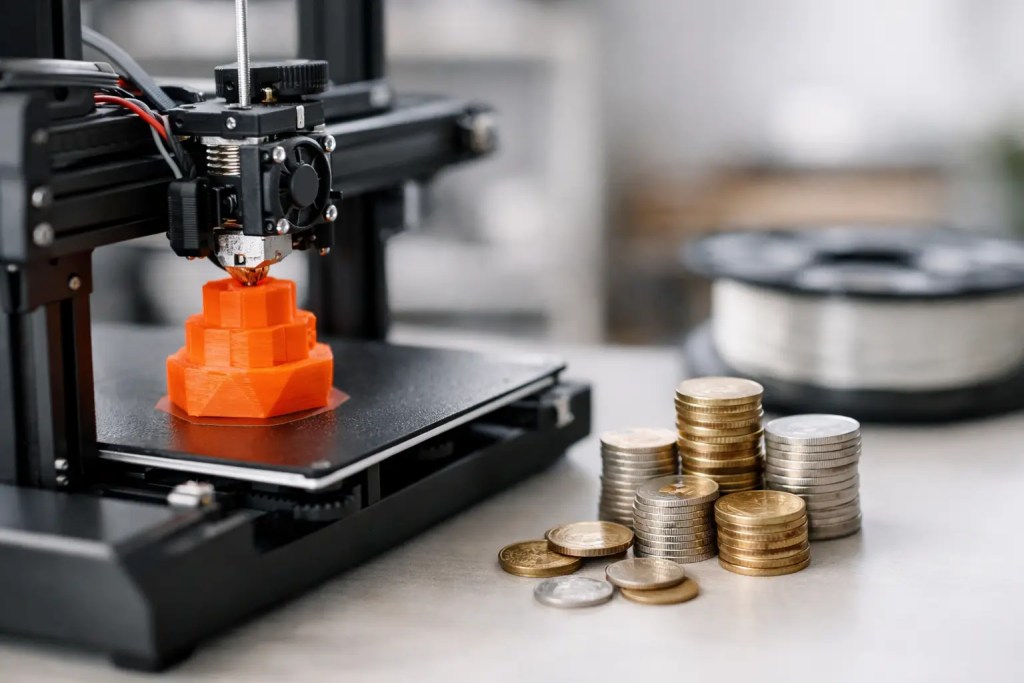
A single printed part can look expensive on a quote, then save weeks of tooling lead time and several design revisions. That is why the real answer to is 3d printing still expensive? is not a simple yes or no. For engineers and procurement teams, the better question is where additive manufacturing is cost-effective, where it is not, and how to choose the right process for the job.
3D printing is no longer uniformly expensive in the way it was a decade ago. Machine access is broader, material options are deeper, software is better, and service bureaus have standardized production workflows. But cost still varies sharply by process, geometry, material, tolerance, finish requirements, and order quantity. A nylon bracket made with Multi Jet Fusion can be cost-efficient in short runs. A large metal component in SS316L or AlSi10Mg with tight tolerances and extensive post-processing can still be a significant investment.
When is 3D printing still expensive?
3D printing becomes expensive when the process is being asked to do something it is not economically optimized for. Metal additive is the clearest example. Powder cost, machine time, inert gas use, support strategies, thermal management, depowdering, heat treatment, machining, and inspection all add cost. If a part also needs cosmetic finishing or critical dimensional control on mating features, the total price rises further.
Part size matters as well. Additive manufacturing does not charge by part count alone. It charges by machine occupancy, build height, material usage, and post-processing effort. A large hollow polymer housing may still be cost-effective, but a large solid block is usually a poor candidate. Good design for additive reduces unnecessary volume, consolidates assemblies, and places material only where performance requires it.
Complexity can either save money or increase it. This is one of the most misunderstood trade-offs. In additive, geometric complexity is often cheaper than it would be with machining or molding because there is no need for custom tooling or multiple setups. Internal channels, lattice structures, and part consolidation can improve economics. At the same time, complexity that creates difficult support removal, awkward orientations, trapped powder, or labor-intensive finishing can push cost back up.
Why the cost picture has changed
The market has matured. Industrial polymer systems such as HP Multi Jet Fusion and SLS are now established production tools, not niche prototype equipment. Material performance is more predictable. Process controls are stronger. Service bureaus can nest multiple parts efficiently, run repeat jobs with standard operating procedures, and deliver more consistent pricing.
This matters because the cost of 3D printing is not just machine ownership. It is process stability. An ISO 9001:2015-certified workflow, formal file review, documented production steps, and repeatable quality checks reduce hidden cost from failed builds, rework, and procurement uncertainty. For engineering teams, that operational reliability often has more business impact than a small difference in per-part price.
Software and quoting infrastructure have also reduced friction. CAD upload, manufacturability checks, and faster quoting shorten the decision cycle. That does not make every part cheaper to produce, but it lowers overhead around sourcing and iteration. For a product team trying to validate fit, function, and assembly in days instead of weeks, that time compression has direct value.
Is 3D printing still expensive compared with machining or molding?
Compared with CNC machining, 3D printing is often more cost-effective for complex geometries, lightweight structures, and early-stage prototypes. CNC remains highly competitive for simple prismatic parts, tight tolerances, and production runs where machining time is predictable and material waste is acceptable. If you need very flat surfaces, sharp internal tolerances on critical bores, or conventional metallic finishes, machining may still be the better-value route.
Compared with injection molding, 3D printing is usually cheaper at low volumes and more expensive at scale. Tooling changes that equation quickly. If you need 10, 50, or even a few hundred functional polymer parts, additive can avoid the upfront tool cost and get parts into testing or market faster. If you need several thousand identical parts with stable geometry, injection molding generally wins on unit economics once the mold cost is amortized.
That crossover point is not fixed. It depends on part size, wall thickness, undercuts, cosmetic standards, resin choice, and whether design changes are likely. A part that is cheap to mold after tooling may still be expensive to revise if the design is not frozen. This is why many teams use 3D printing to bridge the gap between prototype and production, then shift to molding when demand and geometry stabilize.
Process choice has more impact than most buyers expect
Not all additive processes price the same way, and not all produce the same manufacturing outcome. FDM is generally the lowest-cost entry point, but surface finish, isotropy, and dimensional consistency may be limiting for end-use applications. SLA delivers excellent detail and surface quality, though resin properties and long-term mechanical behavior must be matched carefully to the application.
SLS and MJF have changed the economics of polymer production. For functional nylon parts in PA12 or PA11, they often offer a strong balance of mechanical performance, repeatability, and batch efficiency. Jigs, fixtures, enclosures, ducting, snap-fit features, and short-run end-use parts can be produced at pricing that is practical for real manufacturing environments, not just proof-of-concept work.
Metal SLM is different. It provides design freedom that conventional methods cannot always match, especially for internal channels, lightweighting, and consolidated assemblies. But it should be selected for performance or supply chain reasons, not because it is automatically the lowest-cost way to make metal parts. If a geometry can be machined simply from stock with minimal setups, additive may not be the right answer.
The hidden costs that make a cheap part expensive
Focusing only on the quoted unit price can lead to poor sourcing decisions. A cheaper part is not cheaper if it fails in testing, misses tolerance, requires manual rework, or arrives late enough to delay validation. Engineering teams usually absorb these costs indirectly through schedule slip, redesign effort, and procurement churn.
This is why manufacturing discipline matters. Material traceability, build preparation, orientation strategy, support planning, post-processing control, and inspection are not back-office details. They shape the actual cost of the project. The lowest visible quote can become the highest total cost if the supplier lacks repeatable production controls.
The opposite is also true. A part with a higher upfront price can be the lower-cost decision when it reduces assembly count, eliminates tooling, improves lead time, or allows earlier design verification. For many R&D and NPI teams, the most expensive outcome is not the printed part. It is losing a week in the development schedule.
How to tell if 3D printing is cost-effective for your part
Start with the production stage. If the design is still changing, additive usually carries a strong cost advantage because iteration is built into the process. There is no hard tooling to modify, no long requalification cycle, and less sunk cost in design changes.
Then look at geometry. Parts with internal features, complex routing, lightweight structures, or assembly consolidation are often good candidates. Parts that are simple, flat, and easily machined may not be. Material and environment come next. A fixture in PA12 has a very different cost profile from a pressure-bearing metal component in SS316L.
Volume is the final filter. Low-volume and short-run jobs are where additive is strongest. As quantities rise, conventional methods become more competitive. That is why an integrated manufacturing partner is often valuable. The right answer may begin with 3D printing for validation, move to urethane casting for bridge volumes, and transition to injection molding or CNC depending on demand and function.
At Additive3D Asia, this decision logic is central to quoting and process selection. The goal is not to force additive onto every part. It is to match geometry, material, lead time, and quantity to the process that gives the best manufacturing outcome.
So, is 3D printing still expensive?
Sometimes, yes. If you are producing large volumes of simple parts, if the design is already fixed, or if the application demands extensive finishing and tight secondary machining, additive may not be the cheapest route. But in prototyping, low-volume production, complex geometry, and speed-critical programs, 3D printing is often less expensive than the alternatives once total project cost is measured correctly.
The better way to evaluate it is not by asking whether additive is expensive in general. Ask what cost it removes, what lead time it compresses, and what production risk it avoids. That is usually where the real economics show up.
When a manufacturing decision is tied to launch timing, validation speed, and part performance, the lowest sticker price is rarely the whole story. The right process is the one that gets the part built correctly, on schedule, and with enough repeatability to support the next step.