
When a prototype works in the lab but fails on the production floor, the issue is often not the CAD model. It is process selection, material behavior, tolerance strategy, or quality control. That is why an industrial additive manufacturing review should start with manufacturing outcomes, not marketing claims. Engineers and procurement teams need to know which process can repeat, which material can survive the application, and where additive makes economic sense versus conventional methods.
Industrial additive manufacturing is no longer limited to concept models or low-risk mockups. In the right use case, it supports functional prototypes, assembly aids, bridge production, and end-use parts. The challenge is that “3D printing” covers very different technologies with very different performance envelopes. A nylon part built by Multi Jet Fusion will not behave the same way as a resin SLA part. A metal SLM bracket is not simply a machined bracket made a different way. If the review stops at visual quality or headline speed, it misses the decision criteria that matter in production.
Industrial Additive Manufacturing Review Criteria
For engineering teams, the useful review framework is straightforward. Start with function, then match process capability to the requirement. Mechanical load, thermal exposure, chemical contact, accuracy, surface finish, and regulatory expectations all matter. So do lead time, lot size, post-processing needs, and the risk of variation between builds.
This is where additive often gets misunderstood. A process may be fast at printing but slow in post-processing. Another may provide excellent detail but poor long-term durability. One technology may be ideal for ten parts and uneconomical for two thousand. Industrial evaluation means looking beyond the machine and into the full workflow – file preparation, build orientation, support strategy, finishing, inspection, and delivery.
Quality systems also deserve more attention than they usually get. In a service environment, repeatability depends on controlled workflows, machine maintenance, calibrated inspection equipment, and documented handling procedures. ISO 9001:2015 certification does not guarantee that every part will be perfect, but it is a strong signal that the supplier treats manufacturing as a controlled process rather than an ad hoc print operation.
Process-by-Process Industrial Additive Manufacturing Review
HP Multi Jet Fusion
For functional polymer parts, Multi Jet Fusion remains one of the strongest industrial options. It is well suited to PA12 and PA11 components that need balanced strength, dimensional consistency, and production-friendly throughput. Engineers often choose MJF for housings, brackets, jigs, clips, covers, and short-run end-use parts because it offers a practical combination of speed and mechanical performance.
The trade-off is surface character and feature interpretation. MJF parts usually have a fine textured finish rather than the smoother visual quality some teams expect from presentation models. Very thin walls and cosmetic surfaces still need careful review. For assemblies, however, the process is often more valuable than it looks at first glance because it can produce stable, repeatable nylon parts without tooling.
Selective Laser Sintering
SLS serves a similar application space to MJF, particularly for nylon parts, but the production profile is different. It remains a solid choice for durable prototypes and functional components with complex geometries. Engineers often use it when they need no-support powder bed freedom and proven polymer performance.
Compared with MJF, the decision can come down to part geometry, material availability, finish expectations, and supplier workflow. SLS may deliver the needed function, but throughput and consistency can vary depending on machine generation and process control. That is why procurement teams should review not only the technology name but the operating discipline behind it.
SLA
SLA is often the best choice when fine detail, smooth surfaces, and tight visual standards matter. It performs well for display models, fit checks, master patterns, and selected engineering prototypes. Clear parts, detailed housings, and appearance-sensitive features are common examples.
Its limitation is durability. Many SLA resins do not behave like production thermoplastics over time, especially under UV exposure, heat, or repeated mechanical stress. Some engineering-grade resins improve on that, but the process still needs careful application matching. SLA is excellent when resolution matters most. It is less convincing when teams assume appearance quality automatically means production readiness.
FDM
FDM remains relevant because it is accessible, material options are broad, and larger parts can be produced economically. For fixtures, covers, simple functional prototypes, and applications where speed matters more than finish, it still has a place.
The review point here is anisotropy and finish. Layer adhesion affects performance, and support removal can influence cosmetic quality. FDM can absolutely deliver useful industrial parts, but it tends to require more tolerance awareness and more acceptance of visible process marks. It is usually the pragmatic option, not the premium one.
Metal SLM
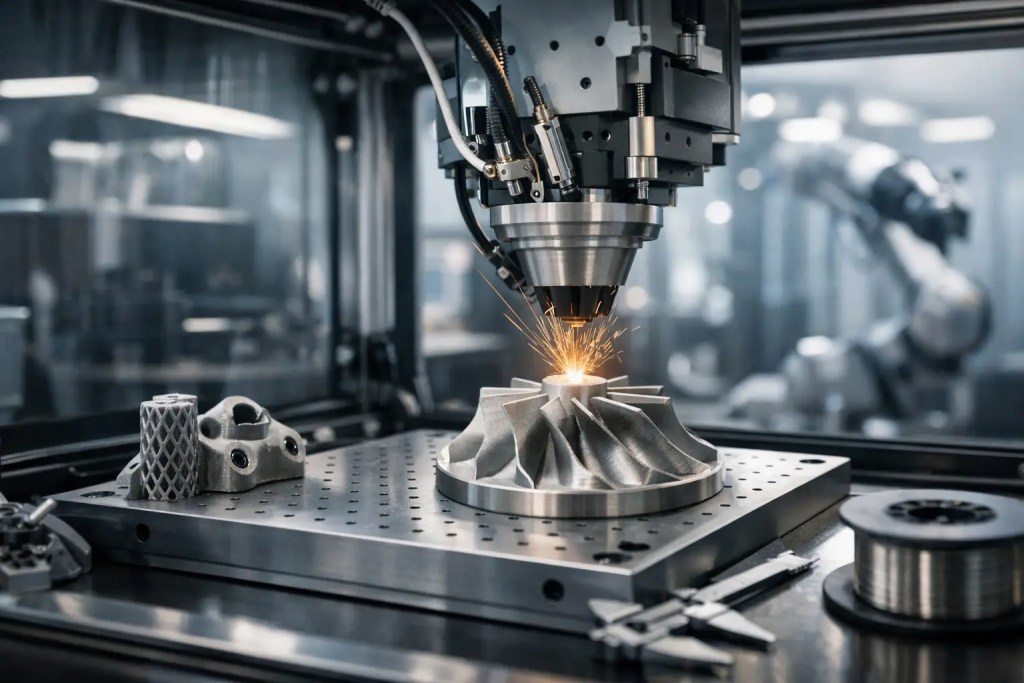
For metal components, SLM opens design space that machining and casting may struggle to match. Lightweight structures, internal channels, part consolidation, and low-volume complex geometries are where it becomes compelling. Materials such as AlSi10Mg and SS316L support real engineering applications, from tooling inserts to industrial hardware and specialized assemblies.
Still, metal additive is not a default replacement for subtractive manufacturing. Surface finish, residual stress, support removal, heat treatment, machining allowances, and inspection requirements all add cost and time. If the geometry does not benefit from additive freedom, CNC machining may remain the better route. The right question is not whether a part can be metal printed. It is whether metal printing improves total manufacturing outcome.
Materials Matter More Than Process Names
A common procurement mistake is selecting a technology first and a material second. In practice, the material requirement should drive the process shortlist. PA12 is a dependable baseline for many functional polymer applications because it balances stiffness, durability, and dimensional stability. PA11 can be attractive when higher ductility is needed. SLA resins vary widely, so performance claims should be checked against actual use conditions rather than generic categories like “tough” or “high temp.”
In metal, AlSi10Mg is often selected for lightweight structures and good cast-like properties, while SS316L supports corrosion resistance and broader industrial use. But raw material data sheets are only part of the story. Build orientation, density, post-processing, and finishing all affect final performance. The more critical the application, the more material selection should be tied to test requirements and inspection planning.
Where Additive Works Best and Where It Does Not
Industrial additive performs best when geometry is complex, volumes are low to medium, iteration speed matters, or tooling avoidance has real value. This includes functional prototypes, jigs and fixtures, bridge production, spare parts, and end-use components with design-driven complexity.
It is less attractive when part geometry is simple, annual volume is high, and unit economics favor molding, machining, or sheet metal. Additive can win the first production phase and lose the mature production phase. That is not a weakness. It is normal process economics. The best manufacturing partners recognize this and can guide customers from prototyping into the most suitable downstream process when volumes change.
That broader capability matters. A supplier that can support additive, CNC machining, urethane casting, injection molding, sheet metal work, and finishing can reduce qualification effort and vendor switching. For engineering teams, that means fewer handoff errors and a clearer path from prototype to production.
What to Look for in a Supplier Review
A serious supplier review should examine more than machine count. Ask how files are checked, how manufacturability feedback is delivered, what materials are stocked, how post-processing is controlled, and how inspection is documented. Turnaround claims should be matched by workflow discipline. Fast quoting is useful only if the resulting parts arrive on spec.
This is where a bureau model can be especially effective. A well-run partner such as Additive3D Asia combines multiple industrial processes, formal quality systems, and project-based flexibility without forcing customers to invest in underutilized equipment. For teams balancing engineering urgency with procurement accountability, that operating model often makes more sense than building every capability in-house.
Final Decision: Review the Whole Production Path
The best industrial additive decisions are rarely about the printer alone. They come from matching application, material, process, finishing, inspection, and volume strategy into one controlled manufacturing plan. If a supplier can explain those trade-offs clearly, recommend the right process even when additive is not the answer, and deliver repeatable parts on schedule, that is usually the strongest sign you are looking at an industrial-grade operation rather than just a print service.
A useful review should leave you with one practical outcome: more confidence in what will happen after the CAD file is uploaded.